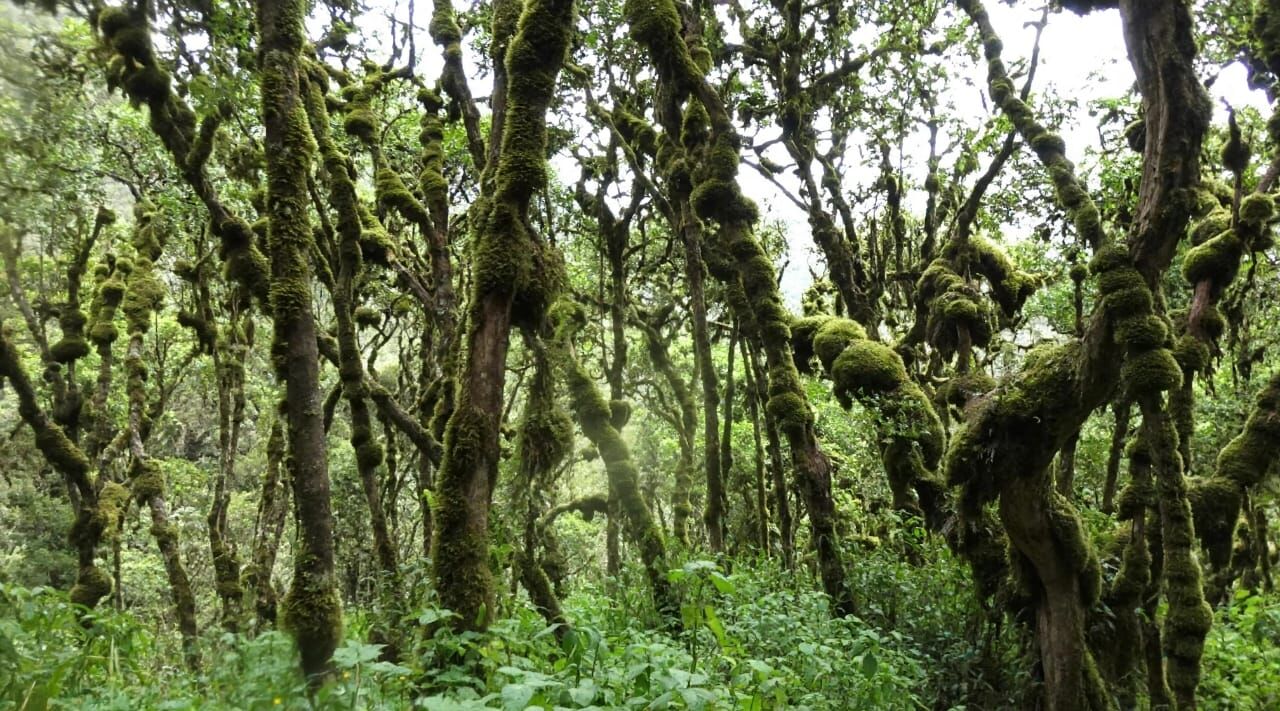
Most packing lists are quietly unhelpful. They tell you to bring “comfortable shoes” without saying those shoes will be destroyed in Bwindi mud by 10 a.m. They tell you to pack neutral colours but never mention that tsetse flies are drawn to black and dark blue, or that camouflage print is restricted for civilians in Uganda. And almost none of them tell you what to leave at home, which is where a third of your suitcase weight usually goes.
This guide is built from what we actually watch guests carry: what they use every day, what they use once, and what they end up leaving in the vehicle. Pack to these lists and you will travel light, dress correctly for 10°C mornings and 28°C afternoons, and keep both hands free.
The five things guests forget most often
Put these in your bag before anything else.
-
1
Gardening gloves
Bwindi’s nettles and thorny Rubus vines are not a metaphor. Thin work gloves are the single most thanked-for item on our feedback forms.
-
2
A buff or neck gaiter
Dust on game drives, cold on Bwindi mornings, insect protection at dusk. One item, three jobs.
-
3
A power bank
Not every lodge room has a free socket, and camera batteries die on the day you least want them to.
-
4
A dry bag or sealable pouch
For your camera, phone, passport and permit on trek days. Rainforest rain arrives without warning.
-
5
Small-denomination USD cash
For tips, porters, curio stalls and the occasional soda. See the money section below for the note rules.
Also easily forgotten: a money belt for travel days, a compact umbrella for towns, a supportive sports bra if you are trekking, and a pocket notebook.
Packing philosophy
Read this before the lists.
Five days of clothing, any length of trip
Lodges launder daily; clothes come back folded the same evening. A 14-day trip does not need a 14-day wardrobe.
The light-aircraft rule
If your itinerary includes a domestic flight, whether at Kihihi, Kasese or Pakuba, the limit is usually 15 kg per person in a soft bag. Wheels and hard shells can be refused. On road-only trips soft luggage still wins: every transfer involves a porter lifting your bag onto a roof rack.
The one-third rule
For a 15 kg bag, aim for 5 kg clothing, 3 kg trekking and footwear, 3 kg electronics, 2 kg toiletries and first aid, and 2 kg documents and everything else. Weigh it at home, not at the check-in counter.
Already in the vehicle, so do not pack it
Drinking water, binoculars (one pair per guest on most of our vehicles; ask if you need more), walking sticks for Bwindi, a first-aid kit, a cool box, phone charging cables and a rain poncho per seat. Bwindi walking sticks are also cut locally and provided by your porter, so a second stick is redundant.
Documents and administration
| Item | Why it matters in Uganda |
|---|---|
| Passport (6+ months validity, 2 blank pages) | Minimum validity is enforced at entry |
| Printed visa approval or e-visa confirmation | Airport Wi-Fi can be down; paper saves chaos |
| Yellow fever certificate | Required for entry; checked on arrival |
| Gorilla and chimp permits | Non-refundable, non-transferable: treat them as cash |
| Travel insurance with medical evacuation cover | Confirm it covers trekking at 2,600 m and off-road travel |
| Printed itinerary and 24/7 emergency numbers | Ours is in your pre-departure pack |
| Copies of passport, insurance and permits | One set in your bag, one photographed in cloud storage |
| 2 passport photos | Sometimes requested for permits or extensions |
| Cash: USD and Ugandan shillings | See the money rules below |
| Credit or debit cards | Visa is accepted at most lodges, often with a 3–5% surcharge |
The USD note rules
Notes must be printed 2009 or later, unmarked, untorn, and not the older small-head designs. Bring any denomination and change it into Ugandan shillings at Entebbe or Kampala before setting off. We recommend using only Ugandan currency on trips.
Timing tip
Ask your bank for USD notes a week before travel. Being handed a torn $50 at the airport is common, and you cannot fix it once you have landed.
Carrying money
A money belt or under-shirt pouch is useful on travel days and long transfers. In camp, use the lodge safe for your passport and spare cash, and carry only what you need for the day.
Health and medication
- Malaria prophylaxis
- Uganda is a malaria country, including Bwindi, Murchison and Lake Mburo. Start before you fly, exactly as prescribed, and do not stop early.
- Insect repellent
- 30–50% DEET or 20% picaridin: one 100 ml bottle per week, and a second for your daypack.
- Personal prescriptions
- In original packaging, with a copy of the prescription. Keep them in your hand luggage.
- A basic first-aid pouch
- Hydrocolloid blister plasters, antiseptic cream, painkillers, antihistamine, rehydration sachets, anti-diarrhoeal, motion-sickness tablets for the Bwindi road, and small scissors or tweezers. Your guide carries a full kit; yours is a top-up, not a dispensary.
- Sun protection
- SPF 50, lip balm with SPF and after-sun. At 1,500 m on the Equator, the sun is unkind even in cloud.
- Hand sanitiser and wet wipes
- Useful before lunch under a fig tree.
- Water
- Bottled or filtered water is provided everywhere we stay. Bring one reusable bottle and, if you are cautious, purification tablets. Skip tap water and ice in rural bars.
- Face masks (2–3)
- Not a COVID requirement, but useful in dry-season dust and around the gorillas, where human respiratory illness transfers easily and some rangers ask trekkers to mask up.
Not worth packing: water purification bottles you will not use, a full pharmacy you will never open, or 60% DEET for children. Check ages with your pharmacist before flying.
Clothing
Colour rules that actually matter
- Khaki, olive, stone, sand, grey-brown Recommended Neutral, hides dust, correct for walking safaris
- Bright white Avoid Red dust stains permanently after day one
- Black and dark navy Avoid Attracts tsetse flies on game drives and at Lake Mburo; also hot
- Camouflage print Restricted Restricted for civilian wear in Uganda; can be questioned and confiscated
- One bright accent (buff, hat, dry bag) Useful Helps your guide spot you in thick forest, and easier to find in a bag
Fabric rules
Choose quick-dry synthetics or merino; avoid heavy cotton and skip jeans entirely. Jeans take two days to dry in a rainforest, weigh twice as much as trekking trousers, and are what most guests regret by day three.
For women travellers
- A supportive sports bra for trek days. It is the most common comfort complaint we hear after trekking, and entirely avoidable.
- A long skirt or two lightweight dresses: cooler than trousers on hot afternoons, and the right choice for village walks, community visits and churches, where shorts draw attention.
- The sarong already on the list doubles as a wrap for modesty at short notice.
Optional but often loved: a light sleeping liner, earplugs and an eye mask (birds and generators start at 5 a.m.), and a small travel towel.
Quantities for a 9-day trip with 2 trek days
| Item | Qty | Notes |
|---|---|---|
| Long-sleeve lightweight shirts | 4 | Sun and insect protection; roll sleeves rather than carry short-sleeve only |
| T-shirts | 2 | Lodge wear |
| Quick-dry trekking trousers | 2 | One worn, one drying |
| Convertible shorts/trousers | 1 | Game drives, Jinja |
| Light shorts | 1 | Hot days; not for villages |
| Fleece or mid-layer | 1 | Bwindi mornings: 10–13°C |
| Packable down or insulated jacket | 1 | Cold mornings, evening boat cruises |
| Waterproof shell and light poncho | 1 each | Poncho for trek days, shell for towns |
| Socks (moisture-wicking) | 5–6 pairs | Double-layer on trek days to prevent blisters |
| Underwear | 6–8 | Quick-dry |
| Wide-brim hat and beanie | 1 each | Sun at midday, cold at dawn |
| Buff / neck gaiter | 2 | Dust, cold, insects, sun |
| Swimwear | 1 | Lodge pools, Lake Bunyonyi, the Nile |
| Sarong or light wrap | 1 | Modesty in villages, blanket on drives, towel substitute |
| Sleepwear | 1 light set | Highlands are cool at night |
| Work gloves | 1 pair | Nettles and thorns in Bwindi |
| Gaiters | 1 pair | Optional: keeps mud and ants out; some lodges rent them |
Footwear: two pairs only
-
Hiking boots, broken in at home
Ankle support, waterproof, ideally with a deep lug sole for wet Bwindi slopes. Walk 10 km in them before you fly; blisters on trek day are avoidable and miserable.
-
Sandals or trainers
For lodges, transfers and Jinja. Optional third: rubber boots for very wet-season travel, though most lodges can lend them. Ask your guide rather than packing them.
Do not bring: new boots, high heels, heavy leather boots, or shoes you cannot walk uphill in for six hours.
The gorilla and chimp trek day kit
The single day guests under-pack. Exactly what goes in the daypack:
- Long trousers, tucked into socks against ants and nettles
- Long-sleeve shirt and work gloves
- Waterproof shell, worn or in the pack
- Gaiters, if you have them
- 2 litres of water minimum
- Packed lunch and snacks (usually from the lodge; confirm the night before)
- Camera with wrist strap and rain cover, no flash
- Binoculars
- Insect repellent and sunblock
- Buff
- Small cash for porter tips (USD 15–20 is standard and well earned), plus a tip for your guide
- Personal medication and blister plasters
- Dry bag for phone, passport and permit
- Face mask
Gorilla trekking rules worth packing around
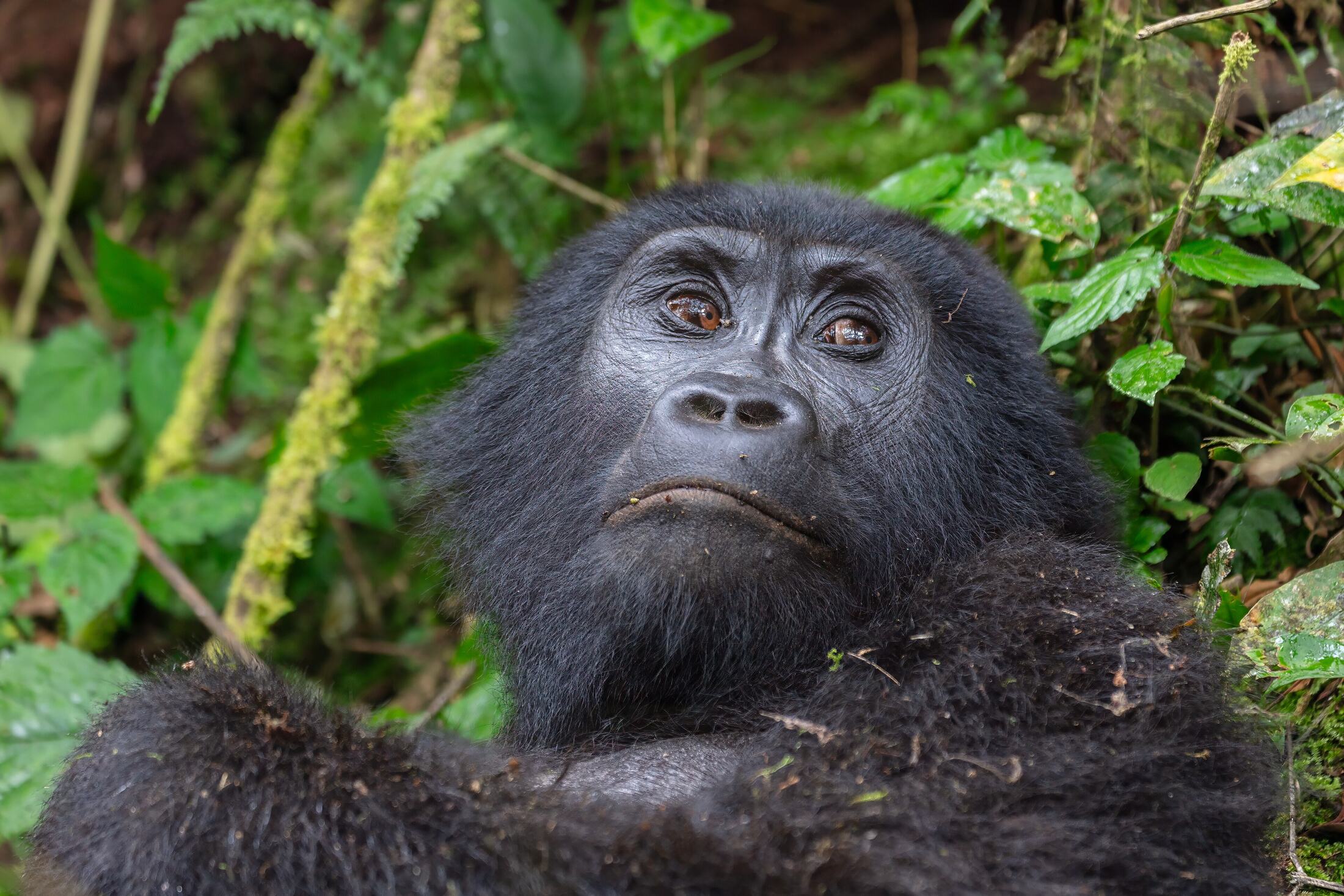
You spend one hour with the gorillas at a minimum of 7 metres. No flash photography. Your trekking stick stays outside the 7 m radius. If you feel unwell, tell your guide before the walk: human illness transfers to gorillas easily, which is also why a face mask belongs in the bag.
A photography reality check
A 70–200 mm on a full-frame camera covers most encounters; 200–400 mm is better for birds. On a phone, use the 2× or 3× lens and resist digital zoom. Leave the gimbal and long tripod at home: the forest floor is uneven, groups move, and you have one hour.
The safari daypack
Every driving day.
- Sun hat, polarised sunglasses with a strap, sunblock
- Buff and insect repellent
- Water bottle, refilled at the lodge each morning
- Binoculars (yours, unless we are supplying them)
- Camera, spare battery, spare memory card
- Power bank and cable
- Snacks: nuts, dried fruit, energy bars
- Tissues and hand sanitiser
- Light rain shell
- Small notes for tips and curio stalls
- A bird and mammal field guide or offline app
Electronics
| Plug adapter: UK Type G (three square pins) | Uganda runs 240 V, 50 Hz on British-style sockets |
| Power bank (10,000–20,000 mAh) | Charging windows can be limited at eco-camps |
| Spare camera batteries and cards | Cold mornings drain batteries faster |
| Headlamp or small torch | Power cuts happen; also for walking to dinner |
| Universal charging cable set | One cable, many devices |
| Optional: small tripod or beanbag | A beanbag is more useful than a tripod in a vehicle |
| Optional: e-reader | Long evenings |
Leave these behind
- Drones. Uganda requires permits from both civil aviation and wildlife authorities; they are effectively not granted to tourists, and flying one can end in confiscation.
- Hair dryers and high-wattage appliances. Many camps run on solar and inverters; a 2,000 W dryer can trip the whole system. Most lodges have one to lend.
- Laptops and tablets you will not open. You will not open them.
Toiletries
Keep it to a single 1-litre bag.
- Toothbrush, toothpaste, floss (bottled water for brushing if you are cautious)
- Biodegradable soap and shampoo; many camps are eco-sensitive
- Deodorant, razor, small mirror
- Moisturiser and lip balm: the highlands are dry and windy
- Sunscreen SPF 50
- Insect repellent (DEET 30–50%)
- After-bite or antihistamine cream
- Wet wipes, tissues, hand sanitiser
- Personal sanitary items: pack more than you think; choice is limited outside Kampala
- Optional: a pee funnel for women on long game drives and forest treks
- Optional: laundry soap for rinsing small items
Do not bring: hotel-sized shampoo collections, mosquito coils (a fire risk in tents), or aerosol cans, which have pressure issues and are often restricted on light aircraft.
By trip type
Jinja & the Nile
Quick-dry shorts, river sandals with grip, a dry bag for rafting, a change of clothes in the vehicle, a waterproof phone pouch, and a rash vest if you sunburn easily.
Birding itineraries
Your own binoculars (8×42 is the sweet spot), a spotting scope only if you are serious and have a porter for it, a regional field guide, and a notebook or app for your list. Neutral clothing matters more than ever: kingfishers notice movement.
Families with children
Pack double the socks and half the toys. A child-size hat with a chin strap, children’s paracetamol, rehydration sachets, a small backpack each so they carry their own water, and a tablet loaded with offline content for the long Bwindi road. Children’s binoculars turn a game drive into a mission.
Honeymoons and couples
One smart-casual outfit for a candlelit dinner, and a light wrap for evening boat cruises. Otherwise the standard list applies; nothing here needs to be formal.
Large groups and convoys
Agree a shared kit list before you fly so you are not carrying four identical first-aid kits and no spare batteries. One person brings the power strip, one brings the cards, everyone brings their own repellent.
Seasonal adjustments
Uganda is green year-round, but the two rainy seasons change what you carry.
| Season | Months | Add | Drop |
|---|---|---|---|
| Dry | Jan–Feb, Jun–Sep | Extra dust protection (buff, dry bag), more water | Heavy rain gear |
| Wet | Mar–May, Oct–Nov | Rubber boots or gaiters, extra dry bags, a second poncho, quick-dry everything | Down jacket (usually) |
Whichever season you travel, Bwindi is a rainforest: it can rain any week of the year, and the trail is muddy even in the dry season. Trekking boots, a poncho and gaiters are not seasonal items.
What not to pack
- Hard-shell or wheeled suitcaseSoft bags suit 15 kg light-aircraft limits; porters carry them on their heads
- Camouflage clothingRestricted for civilian wear in Uganda
- Single-use plastic carrier bagsUganda restricts them; bring reusable cloth or sealable pouches
- DronePermits are effectively unavailable to tourists; confiscation risk
- Jeans and heavy cottonSlow to dry, heavy, wrong for the climate
- White clothingRed dust and mud will claim it
- Black and dark blue for game drivesAttracts tsetse flies
- High heels and dress shoesUnusable outside a lodge lobby
- More than two pairs of shoesYou will wear one
- Heavy tripod or gimbalThe forest is uneven and your time with gorillas is short
- Hair dryer, curling tongs, high-wattage devicesCan trip solar and inverter systems
- Expensive jewellery and valuablesPetty theft risk in towns, and you will worry about them
- Full-size toiletry bottlesWeight and leaks; decant instead
- Mosquito coils and candlesFire risk in tents and thatched camps
- A full pharmacy of “just in case” medicineYour guide has a first-aid kit; bring your prescriptions, not a dispensary
- Books you will not finishOne guidebook or e-reader is plenty
- Work laptop and office kitThis is the one trip where the inbox can wait
The honest rule: if you have not used an item on your last two trips, you will not use it in Uganda. Every item in your bag should have a job on a specific day.
Printable checklist
Packing questions
How much luggage can I bring on a Uganda safari?
Road itineraries are flexible, but any domestic flight segment usually limits you to 15 kg in a soft bag. Pack to that number whether or not you are flying; it makes every transfer easier.
Do I need hiking boots, or are trainers enough?
Trainers are fine for game drives and lodges, but not for Bwindi or Kibale. A wet rainforest slope with roots and mud needs ankle support and grip. Bring broken-in waterproof boots.
Can I wear shorts in Uganda?
Yes, on drives and at lodges. For village visits, community walks and religious sites, dress more modestly: light trousers or a sarong over shorts is appreciated and appropriate.
Is it safe to wear jewellery?
Keep it simple in towns. Leave heirlooms at home; a wedding band and a cheap watch are plenty.
What if I forget something?
Kampala and Entebbe have pharmacies, supermarkets and outdoor shops that cover almost everything on this list, including boots. Tell your guide on day one and it will be sorted before your trek.
What cannot be bought here is your prescription medication, your permit or your broken-in boots, so those come first.
Do I need a mosquito net or water filter?
No. Every lodge and camp we use provides treated water and netted beds. Bring a reusable bottle and a small repellent, not equipment.
Still not sure what to bring?
Send us your travel dates and we will send a personalised, season-specific packing list for your exact route, including whether you need gaiters, rubber boots or a warmer jacket for your trek day.